
Why Muffin Pans?
Tender miso-ginger glazed salmon is tucked into crisp nori-sesame rice bases that bake into sturdy, round cups you can lift straight from the pan. Each molded cup eats like a single-serving salmon donburi, finished with scallions, cucumber, and a touch of Japanese mayo for richness.
Ingredients
- 1 cup short-grain sushi rice, uncooked (rinsed until water runs mostly clear)
- 1 1/4 cups water
- 1/2 tsp kosher salt (for rice)
- 1 tbsp unseasoned rice vinegar
- 1 tsp granulated sugar
- 1 tsp toasted sesame oil
- 2 full sheets nori (roasted seaweed, finely shredded)
- 3 tsp toasted sesame seeds (2 tsp for rice, 1 tsp for garnish)
- 1 lb skinless salmon fillet (center-cut, pin bones removed)
- 2 tbsp white miso paste (shiro miso)
- 1 tbsp plus 1 tsp low-sodium soy sauce (divided)
- 1 tbsp mirin
- 1 tbsp honey
- 1 tbsp fresh ginger (very finely grated)
- 1 small garlic clove (very finely grated)
- 1 tsp plus more neutral oil (canola or grapeseed, plus more for greasing pan)
- 2 tbsp Kewpie mayonnaise (Japanese)
- 1 tsp fresh lime juice (or rice vinegar)
- 2 scallions (thinly sliced, greens and whites separated)
- 1 small Persian cucumber (very thinly sliced)
Instructions
- 01Cook the rice: In a small saucepan, combine the rinsed sushi rice, 1 1/4 cups water, and 1/2 tsp kosher salt. Bring to a boil over medium-high heat, stir once, cover, reduce heat to low, and cook for 15 minutes. Turn off the heat and let stand, covered, for 10 minutes.
- 02Shred the nori: While the rice cooks, stack the 2 full nori sheets and use kitchen scissors to finely shred them into thin strips or confetti-sized pieces. Set aside.
- 03Season the rice: In a small bowl, stir together the unseasoned rice vinegar, granulated sugar, and toasted sesame oil until the sugar dissolves. Fluff the hot rice into a wide bowl, drizzle with the vinegar mixture, add the shredded nori and 2 tsp of the toasted sesame seeds, and gently fold until evenly combined. Let cool until just warm, about 10 minutes.
- 04Prep the pan and oven: Preheat the oven to 400°F. Lightly grease a standard 12-cup muffin tin with a little neutral oil or nonstick spray, making sure to coat the sides and bottoms of each well.
- 05Form the rice bases: Divide the seasoned rice evenly among the 12 wells (about 2 tbsp per cup). With damp fingers, press the rice firmly into the bottom and slightly up the sides of each well, forming a compact, shallow rice cup. Pack it tightly so it will hold together after baking. Set aside.
- 06Mix the miso glaze: In a medium bowl, whisk together the white miso paste, 1 tbsp of the low-sodium soy sauce, mirin, honey, grated fresh ginger, and grated garlic until smooth.
- 07Prepare the salmon: Pat the salmon dry with paper towels and cut into 12 equal cubes, about 1 1/4 to 1 1/2 inches each (trim thinner edges as needed so pieces are fairly uniform). Add the salmon cubes to the miso mixture and gently toss to coat all sides. Let sit for 10 minutes while the oven finishes heating.
- 08Assemble cups: Place one glazed salmon cube, glaze side up, on top of the rice in each well, pressing it down slightly so it nests into the rice but still sits proudly in the center. Spoon any remaining miso glaze evenly over the salmon pieces. Drizzle the 1 tsp neutral oil over the tops to encourage browning.
- 09Bake: Place the muffin tin on the middle rack and bake at 400°F for 14-16 minutes, until the salmon is just opaque in the center and flakes easily with a fork and the rice edges look slightly golden and set.
- 10Make the drizzle: While the cups bake, stir together the Kewpie mayonnaise, the remaining 1 tsp low-sodium soy sauce, and fresh lime juice in a small bowl. Thin with a few drops of water if needed so it's drizzleable.
- 11Cool and release: Let the cups rest in the pan for 5 minutes to firm. Run a thin knife around each cup to loosen the rice from the sides, then gently lift each portion out with a small offset spatula or fork, keeping the round, molded rice base intact under the salmon.
- 12Finish and serve: Transfer the cups to a platter. Drizzle lightly with the soy-lime mayo, sprinkle with the remaining 1 tsp toasted sesame seeds, and top with scallion greens and a few Persian cucumber slices. Scatter the sliced scallion whites over the platter for extra bite and color. Serve warm or at room temperature.
Chef's Notes
The rice must be packed firmly into the wells; if it's too loose, the cups won't hold together. Slightly warm, just-seasoned rice is easiest to mold and binds well as it bakes. Center-cut salmon gives you uniform cubes that cook evenly; if your fillet tapers, use the thicker section and save thin ends for another use. Don't overbake - pull them as soon as the salmon is just cooked to keep it silky. These are excellent at room temperature, so they travel well for lunches or picnics. For a fuller meal, serve two or three cups per person with a simple side of blanched snap peas dressed in soy and sesame oil.
Behind the Scenes
How This Recipe Was Made
Follow the creative team's conversation as they developed, photographed, and published this recipe.
Mon
Tue
Wed
Thu
Fri
Sat
Sun
Margaret
Head Baker
Marcus
Copywriter
Steph
Project Manager
Julian
Art Director
Devon
Site Architect
Ria
Social Media Manager
Miso ginger salmon in a muffin pan. Before anyone starts - yes, this works. Rice sets up clean, fish cooks even, you get twelve portions that don't fall apart in your hand. That is exactly why this wants to be a muffin pan.
Yeah okay, that hand-held angle is actually the hook - people love food they can grab without a plate, and the video writes itself when someone picks one up still steaming.
The grab-and-go angle works, but I'm more interested in what happens before that - the sushi rice itself, how you season it while it's still warm, that moment where vinegar and sugar dissolve into the grain and everything becomes something else entirely.
That seasoning moment is actually really beautiful - what if we lean into both though, like show that transformation happening and then cut to someone grabbing one?
I like that - showing the rice transform and then the payoff of grabbing one warm. The copy can live in that gap between the two moments, where the alchemy happens but before convenience takes over.
That's the only concept worth making - the rice seasoning is where the actual technique lives, not the grabbing part.
The seasoning window is maybe fifteen seconds - that's where the copy earns its place, showing how warm rice actually absorbs the vinegar instead of just sitting on top of it like it does when it cools.
The warm rice absorbing the vinegar - that's the visual that actually stops the scroll, we film that close and tight, no voiceover needed.
That close shot actually works - you'll see the rice go from matte to glossy the second the vinegar hits. We're making this concept. See you tomorrow.
Tray one cooled unevenly. Rice is sticking in the corners - means the ratio is still off or the pan prep needs adjusting. We're starting over.
The sticking is telling us something - maybe the story here isn't about perfect rice, but about the way miso and ginger transform something technically demanding into something worth the effort.
I think Marcus is onto something - the imperfection is actually the hook if we lean into it right.
Yeah, I think we're onto it - the miso-ginger filling is what saves the rice from feeling fussy, makes it feel earned instead of precious. Let's lock in the ratios and move forward with that angle. I'll draft something tonight.
Just uploaded the three salmon cups angles - macro detail, full pan overhead, and the hero three-quarter with one broken open. Each one tells a different story. Curious what lands for you all.
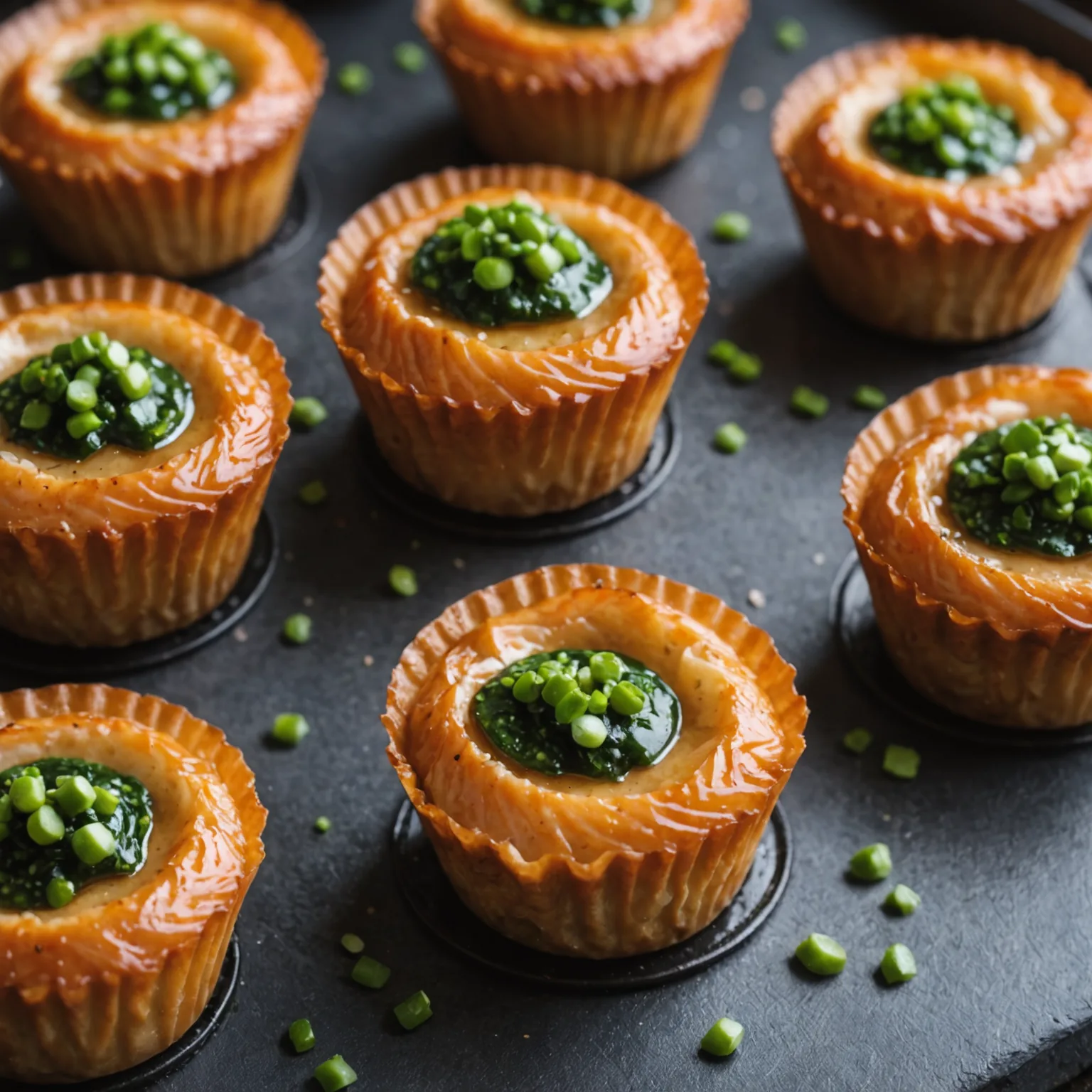

The three-quarter broken-open is the only one that justifies the muffin pan - you see the rice structure, the salmon sitting on top, actually reveals why this format works instead of just looking like a fancy appetizer.

The broken-open shot stops the scroll because you can see the layers actually work - rice holding, salmon on top, not falling apart. That's the sell right there.
The broken-open one works because you see the structural integrity - rice doesn't crumble, salmon doesn't slide. That's the actual argument for the pan.
Yeah, and that's exactly why it works on mobile - people need to understand the structure in under a second or they keep scrolling.
That structural integrity thing - that's the angle I was missing. One shot, we show people why it actually stays together in their hands.
So we're going broken-open for hero, and honestly those shots Julian pulled are exactly what we needed to see. I'm heading out - great work today, everyone.
Morning. Got the miso salmon copy locked in - thinking the title should be "Crispy Rice Cups, Silky Fish" but I'm open to pushback. Copy's in the doc if anyone wants to start picking it apart.
That title works but the copy underneath it needs to breathe - it's dense. What if we front-load the miso part in the headline so your description can focus on the technique instead of restating flavors?
I think that's smart - if the headline does the flavor work, Marcus can actually show us the technique, which is what makes this one interesting anyway.
She's right - technique is what separates this from every other salmon recipe online. Title does the heavy lifting, Marcus keeps it clean. Ship it.
Rice needs to be labeled sushi rice, not just 'short-grain.' Huge difference in starch content and how it absorbs vinegar.
You're right, that labeling matters - but the ingredient shot needs to show the texture difference too, otherwise nobody gets why sushi rice is the actual move here.
The shot helps, but the real test is whether people can actually follow the seasoning ratios without screwing up the vinegar balance.
Yeah, the vinegar ratios are locked in the backend - if someone follows the ingredient list exactly, it'll work.
If the backend locks it in, then the ingredient lineup actually has to visually justify why we're being this specific - the rice grains need to read as distinct, not generic.
The grain texture in that shot actually does the heavy lifting here - if people see the difference, they'll trust the label.
The layout can't bury that shot - it needs real estate so the grain distinction actually lands when someone's scrolling.
If the layout gives that shot the space it needs, then the recipe actually works. We're good to ship it.
staging the miso ginger salmon cups now, should be live within the hour.
Good, but did you verify the rice ratio? Two parts water to one part rice uncooked - that's the only thing that matters here.
Yeah, checked it. Two-to-one is locked in the template, so it'll be consistent every time someone makes it.
That's what matters. The rest of it - the vinegar, the sugar, the ginger - that's all seasoning. Rice doesn't forgive sloppy ratios.
Exactly - that's why it's baked into the template instead of just a note. Live now, verified, you're good.
Alright, everyone here? This is it - miso ginger salmon cups go live in a few and I want to make sure we're all locked in.
Yeah, I'm here - checked the recipe three times already, it's locked.
Good - locked recipe means we can move fast on the social stack. Which shot are we leading with, the rice prep or the finished cups?
The finished cups are the anchor - that gloss on the miso, the sesame scattered across - that's what stops the scroll. Lead with that.