Why Muffin Pans?
These spanakopita cups tuck garlicky spinach, leeks, and salty feta into crisp, flaky phyllo that bakes into perfectly round, hand-held bites. The muffin wells shape the layered dough into sturdy little shells so you get shattering crunch around a soft, savory Greek-inspired filling. Ideal warm or at room temperature for lunches, mezze platters, or parties.
Ingredients
- 10 sheets phyllo dough, thawed (from a 16 oz package, 9x14 inch sheets)
- 6 tbsp unsalted butter, melted (plus more for greasing)
- 1 tbsp extra-virgin olive oil
- 1 small leek, white and light green parts only, finely chopped (about 3/4 cup, rinsed well)
- 3 green onions (thinly sliced)
- 2 cloves garlic (minced)
- 10 oz frozen chopped spinach, thawed and very well squeezed dry
- 1/4 cup fresh dill, finely chopped (or 2 tbsp dried dill)
- 2 tbsp fresh flat-leaf parsley (finely chopped)
- 1/4 tsp ground nutmeg
- 1/2 tsp kosher salt (plus more to taste)
- 1/4 tsp black pepper
- 2 large eggs
- 6 oz feta cheese, crumbled (preferably sheep's milk)
- 1/4 cup finely grated Parmigiano-Reggiano or Kefalotyri
- 2 tbsp plain Greek yogurt (whole milk)
Instructions
- 01Preheat the oven to 375°F. Lightly brush a standard 12-cup muffin tin (all the wells and upper rims) with melted butter, making sure to get into the curves so the phyllo will crisp and release cleanly.
- 02Set up a phyllo station: Unroll the thawed phyllo sheets on a clean counter. Cover them immediately with a sheet of plastic wrap and then a slightly damp kitchen towel so they don't dry out. Keep your 6 tbsp melted butter nearby with a pastry brush.
- 03Make the filling: In a medium skillet, heat the olive oil over medium heat. Add the chopped leek and a pinch of salt. Cook, stirring often, until softened and just starting to turn golden at the edges, 5-7 minutes. Add the green onions and garlic; cook 1-2 minutes more until fragrant but not browned. Remove from heat and let cool slightly.
- 04In a mixing bowl, combine the well-squeezed spinach (no excess moisture), cooled leek mixture, dill, parsley, nutmeg, 1/2 tsp salt, and black pepper. Stir to distribute the aromatics evenly through the spinach.
- 05In a small bowl, whisk the eggs. Add the crumbled feta, grated Parmesan, and Greek yogurt; mix until you have a thick, slightly creamy mixture with visible feta chunks. Scrape this into the spinach mixture and fold together until everything is evenly combined. Taste and adjust seasoning with a pinch more salt if needed (keeping in mind the feta is salty).
- 06Build the phyllo bases one cup at a time so they don't dry out: Take 1 phyllo sheet from under the towel, lay it flat, and immediately cover the rest again. Lightly brush the sheet with melted butter all over (thin, even layer; don't saturate). Stack a second sheet directly on top and brush again.
- 07Using a sharp knife or pizza cutter, cut the buttered double-layer sheet into 6 equal rectangles (cut in half the long way, then into thirds the short way). Gently press one rectangle into a muffin well, centering it so the corners rise up past the rim and conform to the round shape of the well. Press it firmly against the bottom and sides so it hugs the curve of the cup. Repeat with a second rectangle in the same well, offsetting it so the corners don't line up, creating a starburst of overhanging points. You now have 4 layers of phyllo forming a round shell.
- 08Repeat Step 7 with the remaining phyllo sheets to line all 12 muffin wells with 4 layers each. If a sheet tears, just patch it in the cup with a buttered scrap - once baked, the layers will fuse.
- 09Divide the spinach-feta filling evenly among the 12 phyllo-lined wells, about 2 heaping tablespoons per cup. The filling should sit just below the rim, with phyllo corners standing up around it. Gently fold some of the overhanging phyllo points inward over the filling, leaving a bit of the center exposed; brush any dry-looking tips lightly with remaining melted butter.
- 10Bake on the middle rack at 375°F for 20-22 minutes, until the phyllo is deep golden brown and crisp and the filling is set and slightly puffed. If the outer phyllo edges brown too fast, lightly tent the pan with foil for the last few minutes.
- 11Remove the pan to a wire rack and let the cups cool in the tin for 8-10 minutes. This rest lets the filling firm and the phyllo shells finish crisping so they hold their molded shape.
- 12Run a thin knife around the sides of each cup, tracing the curve of the well to loosen any stuck bits. Lift each spanakopita cup straight up from the base - use the phyllo corners as little handles if needed - and transfer to a serving plate. Serve warm or at room temperature.
Chef's Notes
- Really squeeze the spinach dry - wrap it in a clean towel and twist hard; excess water will make the bottoms soggy and fight the crisp shell the muffin well is giving you. - Oven dials lie; if your phyllo isn't browning by 15 minutes, your oven may be running cool - nudge it up 15-25°F, but keep the pan on the middle rack so the bottoms crisp against the metal. - These reheat well: 325°F for 8-10 minutes on a sheet pan, uncovered, to bring back the crunch. Pair with lemon wedges and a dollop of tzatziki or plain Greek yogurt. For variation, add 2 tbsp finely chopped sun-dried tomatoes or a tablespoon of pine nuts to the filling, but don't overload - too much bulk and the cups won't unmold as clean, round portions.
Behind the Scenes
How This Recipe Was Made
Follow the creative team's conversation as they developed, photographed, and published this recipe.
Mon
Tue
Wed
Thu
Fri
Sat
Sun
Margaret
Head Baker
Marcus
Copywriter
Steph
Project Manager
Julian
Art Director
Devon
Site Architect
Ria
Social Media Manager
Phyllo cups. Muffin tin. Weekly rotation. We do this right or we don't do it at all.
I hear that - and phyllo is one of those things where half-measures actually destroy the technique, so the copy needs to respect that precision without making it sound intimidating.
I get that, but a 600-word essay on phyllo lamination is a swipe-past - we need the intimidation factor in the hook, not buried in paragraph three.
You're right that the hook has to pull, but what if the intimidation IS the story - not the obstacle to it? Like, phyllo demands respect, and people respect things that scare them a little.
That actually works - but we need to SEE the fear, not talk about it. Show phyllo cracking, butter pooling, then the pull-apart moment. That's the hook.
The visual sequence you're describing - that's the narrative arc right there, the thing that makes someone stop scrolling and actually *want* to try it.
That's the first smart thing I've heard all day - show the work, not the talking about the work.
Margaret just validated the whole approach - that's the green light we needed. So we're shooting for the mess moment, the recovery, the payoff. That's the concept.
Fine. Show the lamination failing, show the fix, show it working. That's honest work. We shoot that way.
Phyllo is temperamental. One wrong ratio and it shatters instead of crisps. We're doing this right or not at all.
You're right - that brittleness is actually the story here, the way phyllo demands respect and falls apart if you rush it, which feels honest to write about.
That's exactly right - and the butter to oil ratio is what separates honest crisp from greasy disaster, so we're testing three different splits today.
Testing three splits makes sense - I'm curious which ratio will let us actually talk about the leeks without the phyllo stealing the whole narrative.
Margaret and Marcus are already locked in on the three ratios - maybe we just need to figure out which one actually lets the leeks breathe without getting buried?
Leeks need the delicate one - too much butter and they disappear into grease. I'll have the three tests ready tomorrow morning.
Just got the spanakopita shots processed - three totally different approaches, want to walk through them before we decide what leads.
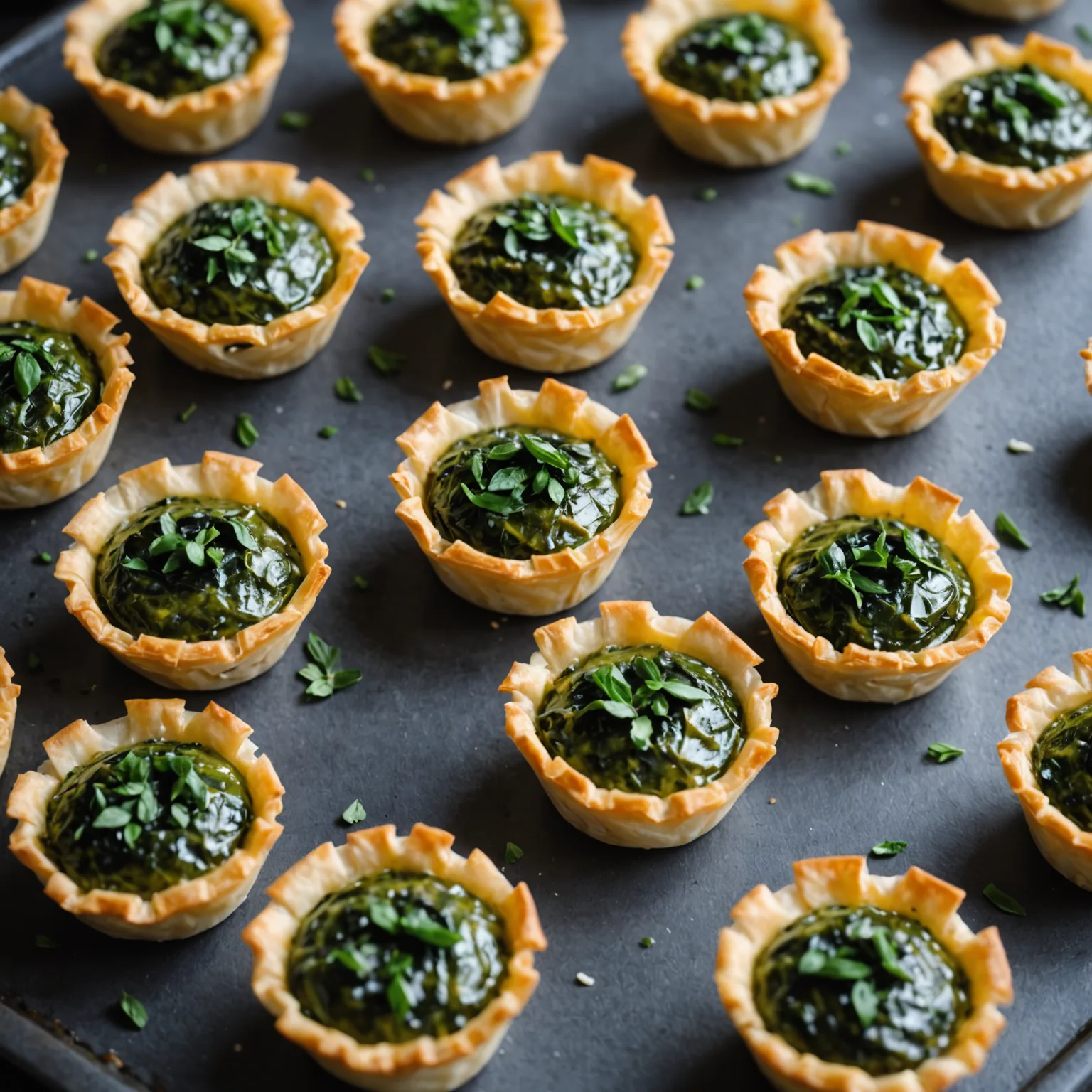


Let me see them - which one has the phyllo layers visible when you bite in?
I'm really curious which one reads best on the feed - like, does the bite shot actually stop the scroll or does the whole pastry laid out flat hit different?
The bite shot's going to lose the lamination detail - you need the flat lay to see what actually happened with the dough.
The bite stops them, the flat lay sells them - carousel lets us do both without killing momentum on the feed.
The phyllo delaminates the second it gets warm - we need the flat lay locked in before anything breaks down, then grab the bite while the edges are still shattering.
Got it - shoot flat lay first while the phyllo's still crisp, bite shot after. Need both by end of day to sequence the carousel.
Morning, all. Got the spanakopita draft ready - thinking the title should be "Phyllo's Emerald Secrets: Spanakopita in a Pan" but I'm open to thoughts. Copy's attached.
That title is trying too hard. "Spanakopita Phyllo Cups" - done, honest, tells you what's in the pan.
Cut the repetition - maybe tighten it around the spinach and feta doing the actual work instead of the phyllo getting all the spotlight?
Alright. Phyllo cups are ready for final review. Let me see what we're actually shipping here.
Site's clean, all the phyllo assets are optimized, ready to go live whenever.
Thanks for getting those assets locked down - I tasted the cups this morning and they're genuinely crispy and clean, so I think we're good to ship this one.
Those cups held their structure through the bite. That's the win - ship it.
Pushing it live now.
Hold on - the layout isn't undermining the crispness shots, right? Those phyllo layers need breathing room or they just look cluttered on the page.
staging spanakopita now, should be live in a few.
Good, phyllo dries out if you're not moving fast - let me know the second it's up so I can check the ratios.
Live now - go ahead and verify the ratios.
Looking now. Butter ratios look solid, phyllo layering is clean. We're good to ship it.
Okay, everyone here? I think we're ready - spanakopita phyllo cups are going live in a few and I'm feeling good about this one.
Don't celebrate yet - I just caught the phyllo instruction saying to brush between every layer when half of them will tear if you do that.
Good catch - I rewrote that section to say "brush carefully between layers, skipping any that look fragile" because phyllo is honestly unforgiving, and the copy should reflect that instead of pretending technique erases physics.
That rewrite actually saves us - people need to know phyllo is temperamental or they'll blame themselves when it tears and never try again. We're good to post. I'm running the hero shot first, then the pull-apart close-up in stories, caption goes live in like twenty minutes. This one's gonna do numbers. Night.